
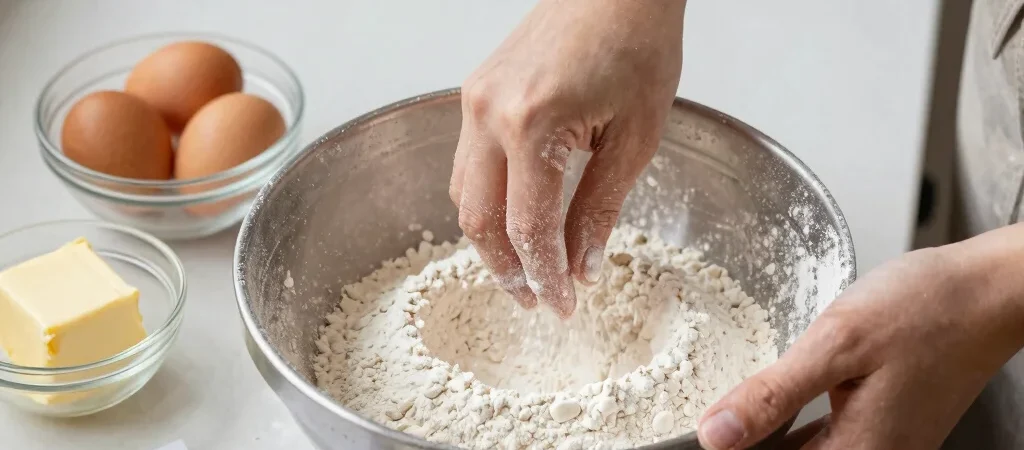
You are halfway through mixing when the recipe says to add the eggs, but the butter is still cold and the oven is not on. That is not a cooking failure; it is a reminder that useful instructions need to help you get ready as well as tell you what to do. Clear cooking steps make it easier to focus on the food in front of you.
Set yourself up first
Read the whole recipe before you begin, then check the details that affect timing. If butter needs to soften, take it out early; if a cake needs a preheated oven, turn it on before you start mixing. Measuring ingredients and setting out the right tin or pan can prevent hurried substitutions later.
Pay attention to how ingredients are described. “Softened butter” and “melted butter” behave differently, and room-temperature eggs can mix more smoothly into a creamed cake batter than cold ones straight from the fridge. These details are not fussiness. They explain why a recipe works the way it does.
Look beyond the timer
A timer is helpful, but it cannot account for every oven, tin or kitchen. Use it as a prompt to check, then look for the visual cues in the recipe: a risen centre, golden edges or a skewer that comes out clean when that test suits the bake. With stovetop cooking, a change in texture or a steady simmer can tell you more than the clock alone.
When you watch a cooking video or follow written instructions, pause at the point where a texture changes and notice what it looks like. The next time you cook, you will have something more useful than a remembered number of minutes: a sense of what the food is doing. That is how recipes become easier to make your own while still giving you a reliable place to begin.